Sunday, March 17, 2019

ALeRT Active Light Roadside Turn-reflectors.


Problem:  road turns are dangerous at night time, especially mounting / forest region, rainy/foggy weather. Only a few luxury car models could turn head-light; with an average lifetime of a car about 20 years, external light on such turns is vital (plus wildlife statistics). Remote areas are too far/expensive to wire per car user there.

Road map: blue - car, yellow car and alert led lights, purple PIR detectors 
Solution: a set of 3-6 roadside reflectors with active light initiation and battery pack.  Front 1-2 poles collect speed movement, simple processor turn on light on the rest 2-4 poles accordingly on short time (15-25 sec). Light could be gradual (by diode number) to inform opposite traffic and provide at least some light on smooth turns / save batteries.

ALeRT light pole (grey-ground section, pink interconnection, white - pole, yellow - cap)
Description. 4 main parts: underground metallic (where batteries and electronics could be safely located); interconnection (holes for ventilation and create punch line stay or brake, and to easily compensate ground movement with a bend compensation),   pole with 4 narrow gaps to direct led light,  rotated cap with vent holes and reflector adjustable to road curve.
Cap, rotated to adjust road angle, has perforation for led ventilations. The reflector could be longer. 
Set of led-laser (could be one). The gap with plastic-lense to direct light down.  
The detector at the bottom (PIR passive infrared, or sonar or another cheap speed movement) will be on the first one-two poles (here shown as a universal pole). 
 
Connection: gear-like rotational positions, perforations for air and breakpoint, clamps for easy set-up.  L or semi-L shape connection to if ground changed buried part angle)
 
Batteries and electronics could be held in a sealed ground pipe (in case top part will be destroyed). Batteries could be located in a separate tank for quick replacement.

Separate quick replacement battery packs and solar units could be added. With LoRa range 15-20 km (take 10) some speed, battery statistics could be also in demand (or downloaded with recharge operation) (Long Range Wifi).  

Risks and general obstacles:
Pole lean – danger to blind opposite traffic. Here why 3d printing with rapid prototyping could be helpful.  The design has punched line at the bottom to prevent lean position. That part could be also exchanged to one with an angle to compensate ground movement. The main idea is to create the very cheap system (low traffic = low budget), hence low profile light with regular monitoring (recharging) could work out (proper poles with solar plus speed monitors also an option).     
There are many ways to create such a system, hence no essential patent value / will be outpaced by low-cost countries. Initial design and testing could be still valuable to perform in local conditions:  how much light (diodes = batteries/cost) is needed, how often to recharge (by whom), where road conditions are a life saver.
Cost is still essential. My preliminary calculations show > $ 10000 range, where batteries take 90% ( 3 months, 200 flashes per night). However, if 2 minutes service is acceptable (rangers, or local commuters: bird’s scooter scheme)…
Different road turns require different light patterns. Adjustable top part with light could be done, however, it could lead to worse (manual adjustment on road is costly, more small parts) than an available set of fixed common angles (10-20 types of tops to a range of turns) – again trial and error good test-filter.


Prehistory and other thoughts:
I was recently driving in Canberra national park and noticed there were more killed animals on road turns. It is truly dangerous on sharp turns: car lights straight making surroundings darker: quick reaction could lead to worst. 
New laser-LEDs (2nd gen) are more efficient and batteries are out of question will progress exponentially (pure current papers * time to market). Hence, we should opt out of our wired paradigm.
Sldlaser.com
You may argue we have BMW Cornering Lights (or future Audi Matrix LED dynamic light) or self-driving cars overall. But even E.Mask, for example, mentioned 25 years as car life expectancy so there will be still time-use if done cheaply.  

I saw the AutoCAD competition promo and decided to use the prize-math-expectation to facilitate drawing study and make some better pictures than common doodles.  (it is not pictures only, though, if I’ll be lucky to get the 3d printer, I’ll do all my best to test and further develop the idea - let it be my small public commitment ;).   If there are more worthy projects, the rare reader - feel free to ask for dwg files: it is good enough to know one might help to save some creatures.

As a small AutoCAD feedback (AutoCAD 2019 mechanical, trial):  although I used AutoCAD in uni 15 years ago, it was harder to mind the gap than I planned.  I stacked with default settings and was sure there should be Solidworks like drawing logic, but only a few buttons.  Later I found some proper intermediate-advance tutorials, so all is fine (moreover, adaptive ribbons show there should be more stuff I don’t yet know like I briefly saw voice control).  Possibly one-two dense quick extended feature video overview will be in demand.  You may also create some mind map of features with 1min video-links. ( the smoother the learning curve, the faster feature-library search for rare functions the better adoption and product expansion). Thanks. 

Saturday, October 27, 2018

smaller endoscope walls


E-paper like principle, but instead of black/white bubbles:  large +, small -.  The bubbles (or not chemically interactive molecules) will move to charges wires bending the worm-skin-like structure.
Such composition could be the thinner than air-liquid bubbles.


Thursday, October 25, 2018

dandelion parachute


This article inspired me of a possible new type of parachute:
https://newatlas.com/dandelion-flight/56868/

"According to the researchers, the dandelion's seeded form is four times more efficient in maintaining altitude than a human-made parachute.
Remarkably, the air bubble is actually made more stable as air flows through it. "


It could be worth trying of such parachute design:

Spring-unfoldable rim (like you might see on baskets) form a set of rings (to prevent fabric collapsing).  Set of straps keep the v (or better U) shape and the slits allow air to go through to stabilize the air bubble.
The number of "circlechutes" should be more than three and probably an internal extra ring or diagonal X bars to support the U shape is also needed.

It doesn't look drastically better than existing parachutes, however, some aspects (if it works at all) could be in use:  more stable descent or more precise in windy conditions, smaller visible area, where an initial mass of the system is not critical (military, or rescue in dense landing).
Not sure about mass-to-value (mass is very critical) for rockets, but could be also worth thinking as an extra saver for 1st stage descent  (the rims with split fabric located around the trunk) or rocket cowl (inside):

Wednesday, October 24, 2018

bend ion thruster

This article about  space junk Two-way ion thruster
https://newatlas.com/two-way-plasma-thruster-space-debris/56548/
Schematic of a magnetic nozzle rf plasma thruster (helicon plasma thruster

raised a question:
why not curve both plasmas - the energy lost for bending the beams could be less than one direction :


The coil could be used as a magnet to pull debris into the mesh (or less likely to use mesh as a bouncer)...


Tuesday, October 23, 2018

ionized mesh - small comment


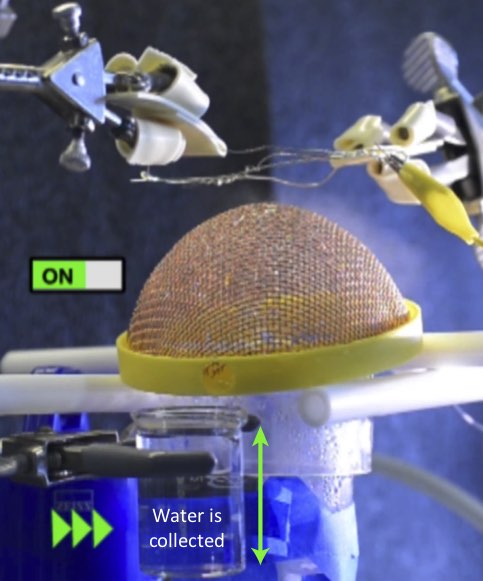
Brilliant findings - ionized mesh to glue the water.

INFINITE COOLINGhttps://www.jamesdysonaward.org/2018/project/infinite-cooling/

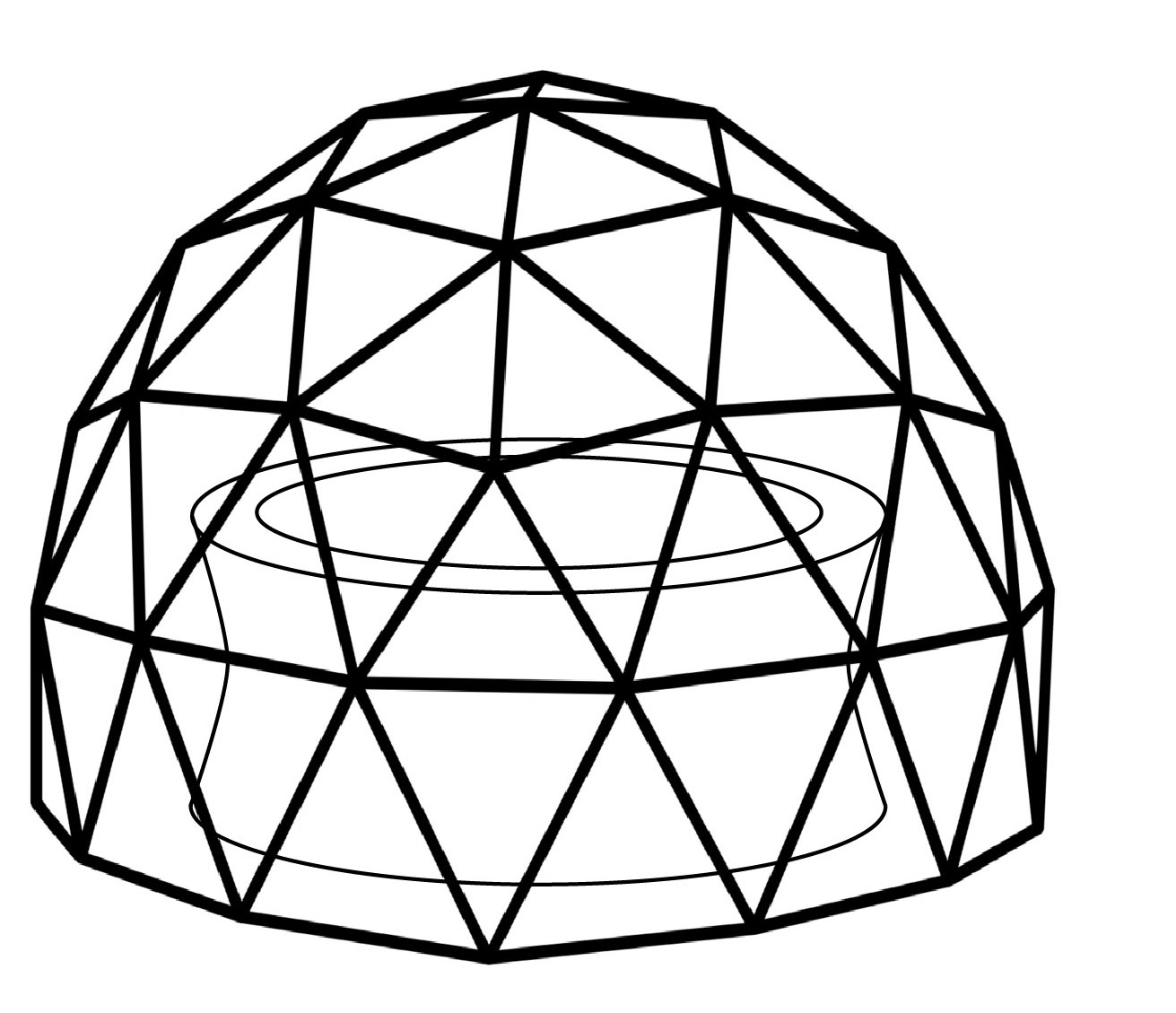
An image with a caption of: Lab-scale prototypeAn image with a caption of: Schematic of dome collector

I see your work may extend to evaporative home coolers and maybe the water desalination without vapor at all.

As a small suggestion: to prevent big mash and potentially a bit better water capture (due to V not A shape - vapor spreads more evenly = smaller mesh cell).

Side walls (plastic film), water pipes work as structure light support. Electric mesh V shape helps vapor to slide inside).


Monday, October 22, 2018

Phone Microscope

Again Dyson candidate's work analysis:

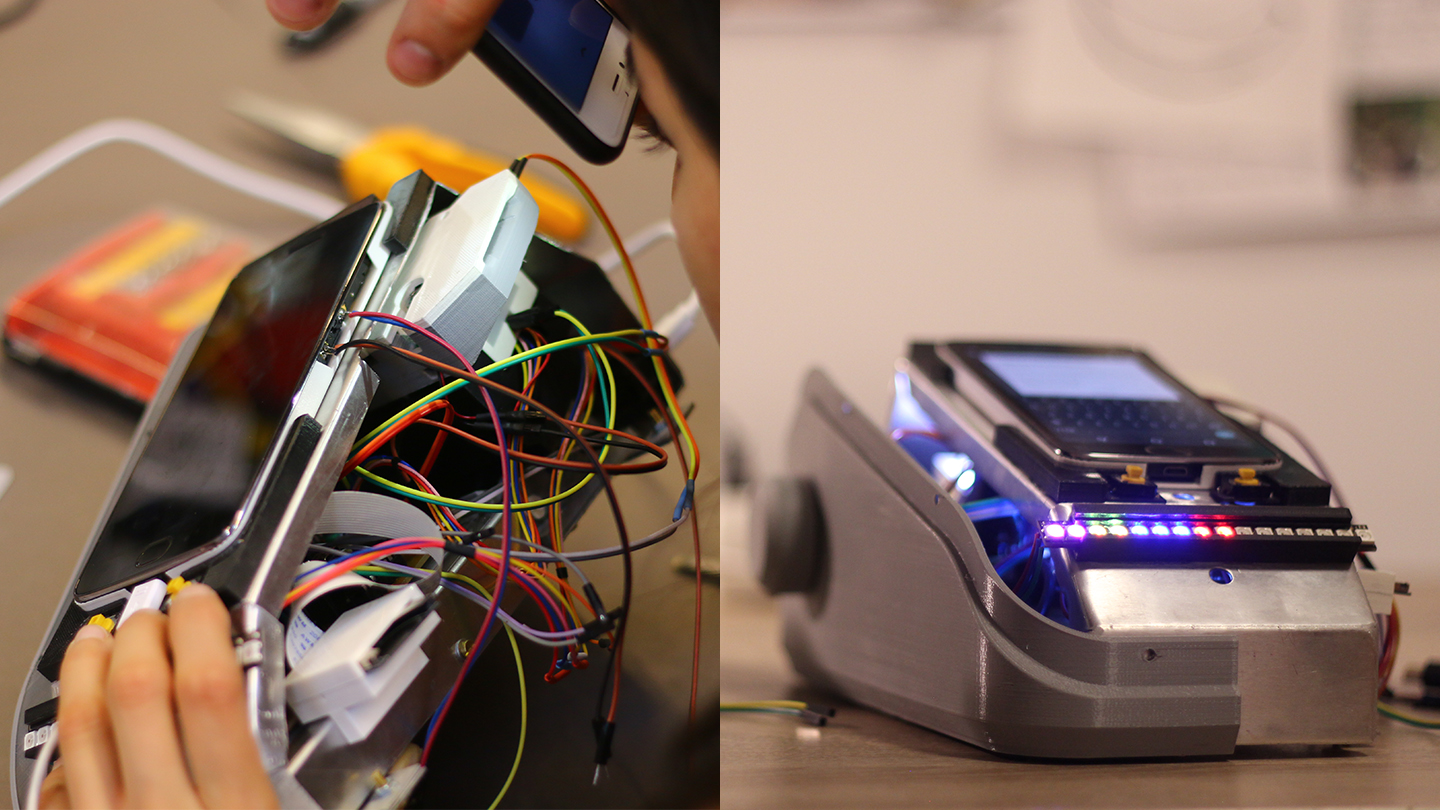
EXCELSCOPE 2.0
cheap microscope to help against malaria
https://www.jamesdysonaward.org/2018/project/excelscope-20-1/

Looks promising for malaria blood testing. They claim to make this product cheap. Could be, but to me looks not easy enough:  phone disassembly, Motorolla specific phone (= to by an extra phone), looks like use only one type of light, automated sample glass movement. 

It is hard to judge, maybe all this complexity is still needed (compare to 1$ solution), however, I'll make my own 10$ idea:  

Passive lense adapter for 1-2 similar most popular phones on the African market (remember about malaria). 
Two holes: 1 for a camera, 1 for the flash.  On top sliding color filters. 
Flash reflectors spread the light from the phone flash more evenly. 
Fixed optimized for the distance lens (or several of them) - the phone is pressed firmly to the top. 
On the bottom: slot for sample glass (or film)  with a hook to rotate the sample. 
The glass is on the angle to make a slight 3d rotation. 
The idea of work:  A person with a popular not expensive android phone put the phone on top of the adapter, the semple to the slot. There are 2-3 positions of sample rotation (bottom) and 3-4 filters.   The app asks to make 6-12 pictures to the cloud (more pictures, much easier for an AI algorithm to detect; color filters create better spectrum like analysis), but I think pre-trained neuron network should work autonomously (with send to the server as an extra option).  
1 picture rotate filter, another rotate position... step by step 12 pictures. 

As a small analysis. There was  another project for malaria (supported by Gates fund):
It also looks a bit sophisticated to be very cheap.  

The red blood cell is about 6 - 8 μm so 130x lens enlarge into 1mm.  
(good comparison https://learn.genetics.utah.edu/content/cells/scale/ 
video Blood on 1000x Microscope HD 1080p https://www.youtube.com/watch?v=9va0KPrVExs)

Hence a cheap Chinese digital microscope + a cheap android phone could make a better deal:
(I don't believe those are 1000x, but 100-200 could be)


Sunday, October 21, 2018

thimble for blind cutt


Another Dyson proposal:
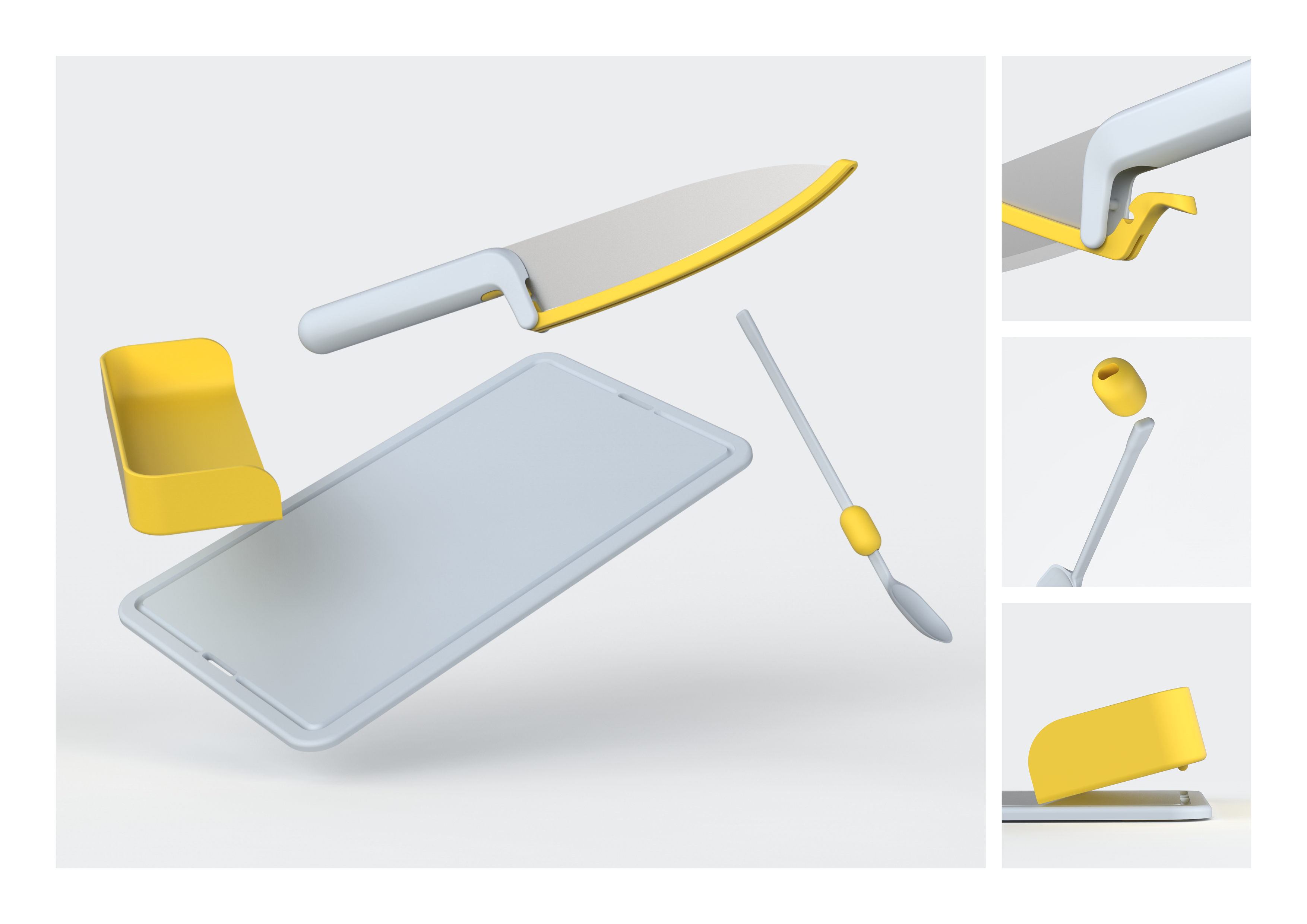
FOLKS KITCHENWARE FOR THE BLIND

https://www.jamesdysonaward.org/2018/project/folks-kitchenware-for-the-blind/

In my opinion, it is not the best solution (for the knife):  it is a special knife, limited cut (the defense will kick back when it lifts up 90 degrees), need to be cleaned (space between defender).

If such a problem really exists for blind people, my solution would be like this:


Silicone thimble for one or two fingers with a small hole for finger tip (to make one feel the edge of the loaf) S shape sliding edge for quick safe chopping (with metallic cap).  Easy to wash, cheap.
(the knife is a common one).

Didn't check may something like this already in use for common chopping.